Interspecies Resonance
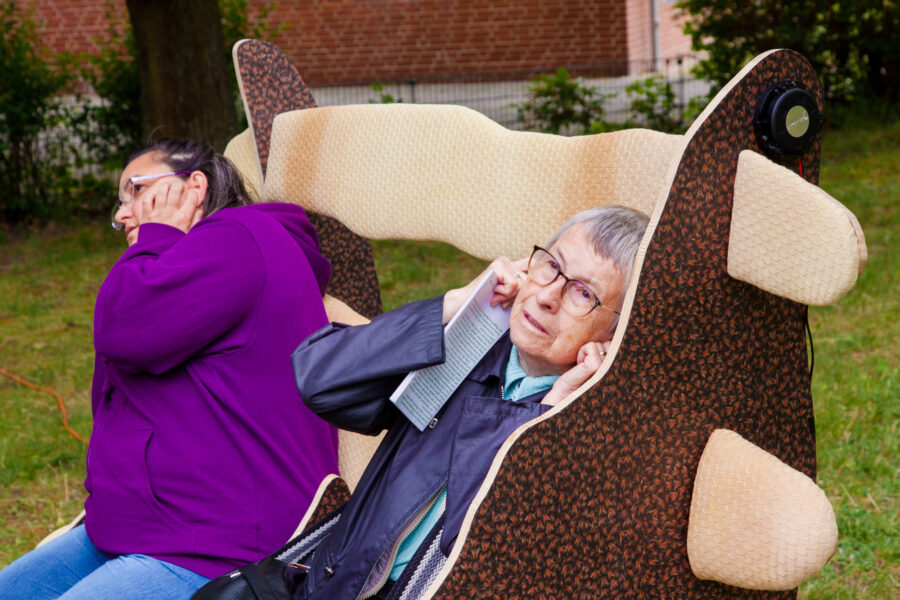
“Head Rest” reinterprets the busy humming of a beehive as emotional infrastructure. Lying on beehives has long been used as sonic therapy for anxiety. In this installation, the sound is not primarily heard but felt—transmitted through the bones of the skull. It acts directly on the nervous system, supporting a shift into a “rest and digest” state. The fate of bees and humans is inseparable: if bees go extinct we will die, but we also heal when the hive is alive and buzzing.
Head Rest is the first prototype in a larger series of objects exploring human-animal relations through sound. Across species, sound functions not only as communication but also as embodied encounter. Bees’ buzzing and cats’ purring have measurable therapeutic effects on humans, while divers have described being the object of whales’ echolocation as one of the most profound experiences of their lives. At the same time, researchers studying sperm whale clicks have identified structural patterns that resemble aspects of human language. Humans are teaching cats and dogs to communicate through speech buttons, while AI-assisted research is beginning to identify language patterns in whale communication.
These developments suggest new possibilities for relationships between humans and other species. In 1970, scientist Roger Payne released Songs of the Humpback Whale, an album of whale vocalizations that helped catalyze the global “Save the Whales” movement and contributed to historic bans on commercial whaling. If hearing whale voices could transform public empathy, what might happen when animal sound is experienced through the body? Can sonic embodied encounters with nonhumans expand our capacity for empathy—not only toward animals, but toward all kinds of others?
-

Head Rest at Wildmeisterdamm, Gropius Kulturinsel, Berlin, 2026 Photo: Joanna Szproch
-
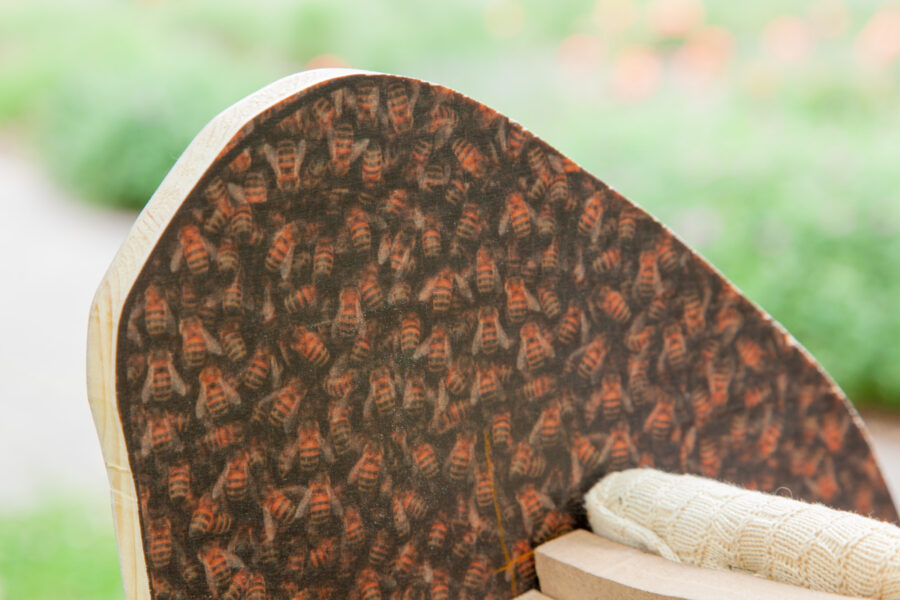
Head Rest: Detail, UV print on wood. Photo: Joanna Szproch
-

In humans, cat purring frequencies trigger the release of mood-boosting endorphins and serotonin, lower stress hormones (cortisol), and reduce blood pressure. Rendering of a cat chair that works with bone conduction.
-
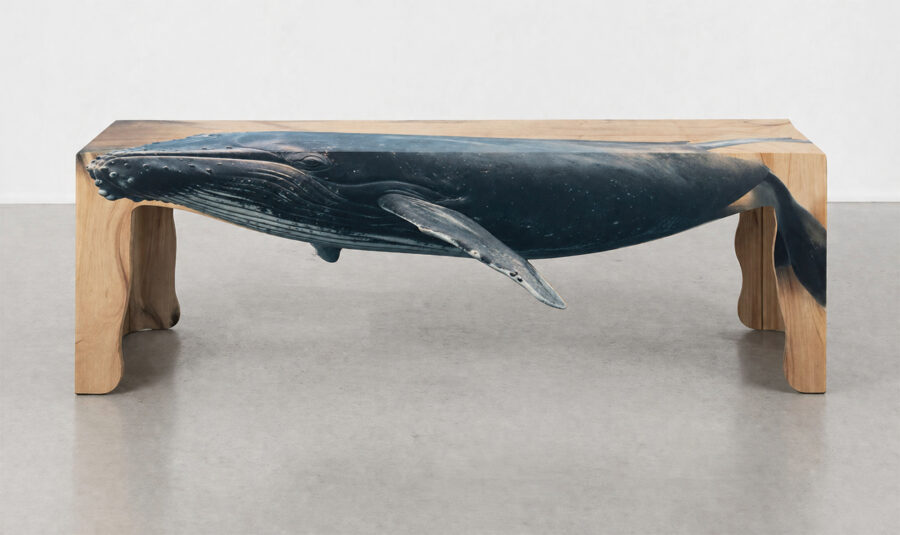
Whales scan their environment—including humans—using echolocation, emitting powerful, focused acoustic clicks that act like an underwater ultrasound. When aimed at a human, this acoustic "scan" can literally vibrate the body, and divers have reported feeling their hands and chests heat up from the intense, concentrated sound waves. Early rendering of a whale bench, using tactile transducers to mimic the whale's sound transferred to the seated human body.
-

Head Rest is inspired by natural beehives. UV printed wood, naturally dyes cotton, foam, tactile transducers. Photo: Joanna Szproch
-

Head Rest: The buzzing of the bees is transfered as sound directly to the head via bone conduction. Can a busy beehive quiet down our thoughts? Photo: Joanna Szproch